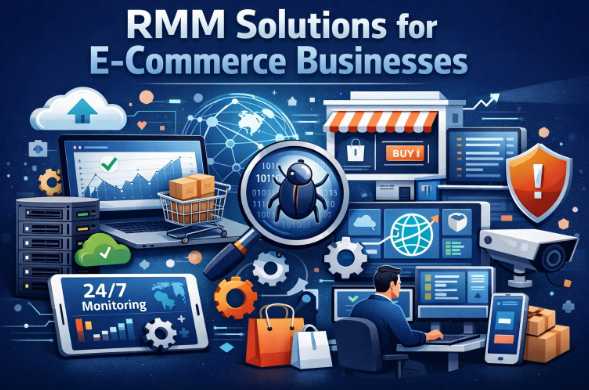
Remote Monitoring and Management, often referred to as RMM solutions, plays a critical role in modern digital infrastructure, especially in high-demand environments like e-commerce businesses RMM solutions enhance e-commerce. At its core, RMM is a technology framework that enables businesses to monitor, manage, and maintain IT systems remotely in real time. Imagine having a centralized command center that continuously watches over your servers, networks, databases, and endpoints without requiring physical intervention. That is exactly what RMM delivers.
For e-commerce platforms, where every second of downtime can result in lost revenue, RMM becomes more than just a convenience—it becomes a necessity. These systems use advanced monitoring tools, automation, and alert mechanisms to detect anomalies, performance issues RMM solutions enhance e-commerce, or potential threats before they escalate into critical failures. Instead of waiting for a problem to disrupt operations, RMM proactively identifies and resolves issues, ensuring business continuity.
The beauty of RMM lies in its scalability. Whether you are running a small online store or managing a global marketplace, RMM adapts to your infrastructure. It integrates seamlessly with cloud environments, hybrid systems, and on-premise setups, providing full visibility across your IT ecosystem. This level of control allows e-commerce businesses to maintain optimal performance RMM solutions enhance e-commerce, enhance security, and reduce operational complexity.
Why E-Commerce Businesses Need RMM Solutions
E-commerce businesses operate in a fast-paced, highly competitive environment where customer expectations are higher than ever. A slow-loading website, a failed transaction, or a security breach can instantly damage brand reputation and customer trust RMM solutions enhance e-commerce. This is where RMM solutions for e-commerce step in as a strategic asset.
Think about peak shopping seasons like Black Friday or major sales campaigns. Traffic surges can overwhelm servers, causing slowdowns or crashes. Without proper monitoring, these issues might go unnoticed until customers start abandoning their carts. RMM ensures that such scenarios are detected and resolved instantly, minimizing disruptions and maximizing conversions.
Another critical aspect is cybersecurity. E-commerce platforms handle sensitive customer data, including payment information, making them prime targets for cyberattacks. RMM tools continuously scan for vulnerabilities, monitor suspicious activities, and apply security patches automatically. This proactive defense mechanism significantly reduces the risk of data breaches.
Operational efficiency is another reason why RMM is indispensable. Instead of relying on manual IT management, businesses can automate routine tasks such as updates, backups, and performance checks. This not only saves time but also reduces human error, allowing teams to focus on strategic growth initiatives rather than firefighting technical issues.
Key Features of RMM Solutions for E-Commerce
Real-Time Monitoring and Alerts
One of the most powerful features of RMM solutions for e-commerce businesses is real-time monitoring. This capability allows businesses to track the performance of their entire IT infrastructure continuously. From server health and network latency to application performance, every critical metric is monitored in real time.
When something goes wrong, RMM systems generate instant alerts. These alerts can be customized based on thresholds, ensuring that IT teams are notified only when necessary. For example, if server CPU usage exceeds a certain limit, the system can trigger an alert and even initiate automated corrective actions.
This proactive approach eliminates guesswork. Instead of reacting to customer complaints, businesses can address issues before they impact users. It’s like having a digital watchdog that never sleeps, ensuring your online store operates smoothly at all times.
Automated Maintenance and Updates
Automation is at the heart of modern RMM solutions, and for e-commerce businesses, it is a game-changer. Routine maintenance tasks such as software updates, patch management, and system optimization can be automated, reducing the need for manual intervention.
Imagine running an online store that updates itself during off-peak hours, ensuring minimal disruption to customers. That’s the power of automation. RMM tools schedule updates intelligently, apply patches to fix vulnerabilities, and optimize system performance without human involvement.
This not only improves efficiency but also enhances reliability. Automated processes are consistent and less prone to errors compared to manual operations. For e-commerce businesses, this means fewer outages, improved security, and a more stable platform for customers.
Security and Threat Detection
Security is a top priority for any e-commerce business, and RMM solutions provide robust tools to protect sensitive data and systems. These tools include real-time threat detection, vulnerability scanning, and automated incident response.
RMM systems monitor network traffic, identify unusual patterns, and flag potential threats. For example, if there is a sudden spike in login attempts, the system can detect it as a possible brute-force attack and take preventive measures. Additionally, RMM tools ensure that all systems are up to date with the latest security patches, reducing the risk of exploitation.
This layered approach to security creates a strong defense against cyber threats, ensuring that customer data remains safe and business operations remain uninterrupted.
Benefits of RMM Solutions for Online Stores
Improved Website Uptime and Performance
For e-commerce businesses, uptime is directly linked to revenue. Even a few minutes of downtime can result in significant financial losses. RMM solutions ensure high availability by continuously monitoring system performance and addressing issues proactively.
By identifying bottlenecks and optimizing resources, RMM tools enhance website speed and responsiveness. Faster websites not only improve user experience but also boost search engine rankings, driving more traffic and conversions.
Enhanced Cybersecurity for Transactions
Online transactions require a high level of security. Customers need to trust that their personal and financial information is safe. RMM solutions strengthen cybersecurity by implementing continuous monitoring, encryption protocols, and automated threat mitigation.
This builds customer confidence and reduces the risk of fraud, chargebacks, and reputational damage. In a digital marketplace where trust is everything, strong security measures can be a significant competitive advantage.
Reduced IT Costs and Operational Efficiency
Managing IT infrastructure manually can be expensive and time-consuming. RMM solutions for e-commerce businesses reduce costs by automating routine tasks and minimizing the need for large IT teams.
With centralized management, businesses can monitor multiple systems from a single dashboard, improving efficiency and reducing overhead. This allows companies to allocate resources more effectively, focusing on growth and innovation.
How RMM Improves Customer Experience
Faster Load Times and Reduced Downtime
Customer experience is the backbone of e-commerce success. Slow websites and frequent downtime can drive customers away. RMM solutions optimize performance, ensuring fast load times and consistent availability.
When customers can browse, search, and checkout without delays, they are more likely to complete purchases and return for future transactions. This creates a positive feedback loop that drives long-term growth.
Seamless Shopping Experience
A seamless shopping experience is essential for customer satisfaction. RMM solutions ensure that all components of the e-commerce platform work together harmoniously, from product listings to payment gateways.
By eliminating technical glitches and ensuring smooth operations, RMM enhances the overall user experience, leading to higher conversion rates and customer loyalty.
RMM Integration with E-Commerce Platforms
Compatibility with Shopify, WooCommerce, Magento
Modern RMM solutions are designed to integrate seamlessly with popular e-commerce platforms such as Shopify, WooCommerce, and Magento. This compatibility ensures that businesses can leverage RMM capabilities without disrupting existing workflows.
API Integrations and Customization
APIs play a crucial role in extending the functionality of RMM tools. Businesses can customize monitoring parameters, integrate third-party tools, and create tailored solutions that meet their specific needs.
Top RMM Tools for E-Commerce Businesses
Features Comparison Table
| RMM Tool | Key Features | Best For | Pricing Model |
|---|---|---|---|
| ConnectWise | Automation, Monitoring | Large Enterprises | Subscription |
| NinjaOne | Endpoint Management | SMEs | Per Device |
| Atera | All-in-One RMM | Startups | Pay-as-you-go |
| Datto RMM | Security Focus | Managed Services | Subscription |
Choosing the Right RMM Tool
Selecting the right RMM solution for e-commerce depends on several factors, including business size, budget, and technical requirements. Businesses should evaluate features, scalability, and integration capabilities before making a decision.
Implementation Strategies for RMM in E-Commerce
Step-by-Step Deployment Process
Implementing RMM requires careful planning. Businesses should start by assessing their IT infrastructure, identifying critical systems, and defining monitoring requirements. Next, they should select an appropriate RMM tool, configure settings, and test the system before full deployment.
Best Practices for Optimization
To maximize the benefits of RMM, businesses should regularly review performance metrics, update monitoring parameters, and ensure that systems are aligned with business goals.
Challenges of RMM Adoption
Common Pitfalls and How to Avoid Them
While RMM offers numerous benefits, implementation challenges can arise. Common pitfalls include improper configuration, lack of training, and over-reliance on automation. Businesses should address these issues through proper planning and continuous monitoring.
Cost Considerations
Cost is an important factor when adopting RMM solutions. While initial investment may be significant, the long-term benefits in terms of efficiency and security often outweigh the costs.
Future Trends in RMM for E-Commerce
AI-Powered Monitoring
Artificial intelligence is transforming RMM solutions by enabling predictive monitoring and intelligent automation. AI can analyze patterns, predict potential issues, and recommend solutions, enhancing efficiency and reliability.
Predictive Analytics and Automation
Predictive analytics allows businesses to anticipate problems before they occur. Combined with automation, this creates a proactive management approach that ensures optimal performance and minimal downtime.
Conclusion
RMM solutions for e-commerce businesses are no longer optional—they are essential for maintaining performance, security, and customer satisfaction in a competitive digital landscape. By leveraging real-time monitoring, automation, and advanced security features, businesses can ensure seamless operations and sustainable growth.
FAQs
1. What is RMM in e-commerce?
RMM in e-commerce refers to remote monitoring and management tools that oversee IT infrastructure, ensuring optimal performance and security.
2. Why are RMM solutions important for online stores?
They help prevent downtime, enhance security, and improve operational efficiency, which are critical for e-commerce success.
3. Can small businesses use RMM solutions?
Yes, many RMM tools are scalable and affordable, making them suitable for small and medium-sized businesses.
4. How does RMM improve cybersecurity?
RMM tools provide real-time threat detection, automated updates, and vulnerability management to protect systems.
5. What are the best RMM tools for e-commerce?
Popular options include ConnectWise, NinjaOne, Atera, and Datto RMM, each offering unique features for different needs.
Read More :