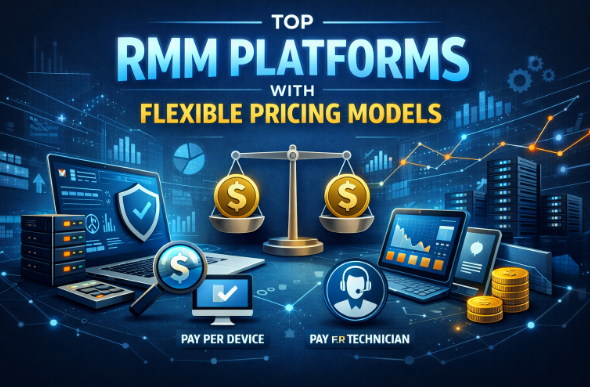
Remote Monitoring and Management, commonly referred to as RMM software, represents one of the most essential technologies in modern IT infrastructure management, enabling businesses to monitor endpoints top RMM platforms with flexible, networks, and systems remotely with unparalleled efficiency and control. If you think about how organizations manage hundreds or even thousands of devices across multiple locations, you begin to realize how impossible manual oversight would be without advanced RMM platforms designed to automate, analyze, and respond in real time. These platforms act like a centralized command center, allowing IT professionals to detect issues before they escalate, deploy updates seamlessly, and maintain system health without physical intervention. In today’s highly digital environment, where downtime translates directly into financial loss and reputational damage, adopting a reliable RMM solution is no longer optional but a strategic necessity for organizations aiming to maintain operational continuity and cybersecurity resilience.
Why Businesses Need RMM Tools Today
Modern businesses operate in an environment defined by distributed workforces, cloud-based systems, and increasing cybersecurity threats, making RMM tools indispensable for maintaining stability and performance across all digital assets. Imagine managing a hybrid workforce where employees access company systems from various devices and locations; without a robust monitoring system, identifying vulnerabilities or performance bottlenecks becomes incredibly challenging. RMM platforms solve this problem by providing real-time visibility into every connected device, ensuring that potential threats are identified and mitigated before they disrupt operations. Additionally, these tools empower IT teams to automate repetitive tasks such as patch management top RMM platforms with flexible, software updates, and system diagnostics, allowing them to focus on strategic initiatives rather than routine maintenance. As businesses continue to scale and adopt more complex infrastructures, the role of RMM software becomes increasingly critical in ensuring efficiency, security, and scalability.
Understanding Flexible Pricing Models in RMM
Types of Pricing Models
Pay-Per-Device
The pay-per-device pricing model is one of the most straightforward and widely adopted structures in the RMM ecosystem, allowing organizations to pay based on the number of endpoints they manage rather than the number of users or technicians. This model is particularly beneficial for companies with smaller IT teams but a large number of devices, as it ensures predictable costs aligned with infrastructure scale. For example, a growing startup with hundreds of IoT devices can manage its expenses efficiently by only paying for each device monitored, rather than incurring higher costs tied to user licenses.
Pay-Per-Technician
In contrast, the pay-per-technician pricing model focuses on the number of IT professionals using the platform, offering unlimited device management under a fixed cost per technician. This approach is ideal for managed service providers (MSPs) or organizations handling a large number of endpoints, as it eliminates the need to calculate costs per device and allows for scalable operations without exponential cost increases. By paying per technician, companies gain flexibility and cost efficiency, especially when managing extensive networks.
Benefits of Flexible Pricing
Flexible pricing models in RMM platforms provide businesses with the ability to align their IT expenses with operational needs, ensuring cost efficiency and scalability without compromising performance or security. Unlike rigid pricing structures, flexible models adapt to business growth, allowing organizations to scale up or down without facing financial strain. This adaptability is particularly valuable for startups and SMEs, which often operate under tight budgets and require solutions that can evolve alongside their growth trajectory. Additionally, flexible pricing fosters transparency, enabling businesses to understand exactly what they are paying for and avoid hidden costs that can arise from complex licensing agreements.
Key Features to Look for in RMM Platforms
Automation Capabilities
Automation lies at the heart of every effective RMM platform, enabling IT teams to streamline operations and reduce manual intervention through intelligent workflows and scripting capabilities. From automated patch management to scheduled maintenance tasks, automation ensures that systems remain updated and secure without requiring constant oversight. This not only improves efficiency but also minimizes the risk of human error, which is often a significant factor in system vulnerabilities.
Security and Monitoring Features
Security is another critical component of RMM platforms, with advanced tools offering real-time monitoring, threat detection, and incident response capabilities that protect organizations from cyber threats. These features include endpoint protection, vulnerability scanning, and automated alerts that notify IT teams of potential issues before they escalate into major problems. In an era where cyberattacks are becoming increasingly sophisticated, having a robust security framework integrated into RMM software is essential for safeguarding sensitive data and maintaining compliance with industry regulations.
Top RMM Platforms with Flexible Pricing Models
Atera
Atera stands out as one of the most popular RMM platforms, particularly due to its innovative pay-per-technician pricing model, which allows unlimited device management under a single subscription. This approach makes it highly cost-effective for MSPs and IT departments managing large networks, as it eliminates the need to scale costs based on the number of endpoints. Atera also offers a comprehensive suite of features, including remote access, automation, and integrated ticketing, making it a versatile solution for businesses of all sizes.
NinjaOne
NinjaOne has gained significant traction in the RMM market due to its intuitive interface, powerful automation capabilities, and flexible pricing options tailored to different business needs. Unlike traditional RMM tools, NinjaOne emphasizes ease of use and rapid deployment, allowing organizations to implement and scale their monitoring systems quickly without extensive training. Its pricing model is adaptable, offering both per-device and customized plans that cater to diverse operational requirements.
ConnectWise Automate
ConnectWise Automate is a robust RMM platform designed for advanced IT management, offering extensive automation, scripting, and monitoring capabilities that cater to complex infrastructures. Its flexible pricing structure allows businesses to choose plans based on their specific needs, making it suitable for both small enterprises and large organizations. ConnectWise Automate is particularly known for its scalability and integration capabilities, enabling seamless collaboration across different IT systems.
Datto RMM
Datto RMM is widely recognized for its cloud-based architecture and strong focus on security, providing businesses with reliable monitoring and management tools that operate seamlessly across distributed environments. Its pricing model is flexible, allowing organizations to select plans that align with their operational scale and budget constraints. Datto RMM also offers advanced automation features, making it a powerful solution for businesses seeking efficiency and reliability.
ManageEngine RMM Central
ManageEngine RMM Central combines affordability with powerful functionality, offering a flexible pricing structure that caters to businesses of all sizes. With features such as network monitoring, patch management, and remote troubleshooting, it provides a comprehensive solution for IT management. Its scalability and cost-effectiveness make it an attractive option for organizations looking to optimize their IT operations without overspending.
Comparative Analysis of Top RMM Tools
Pricing Comparison Table
| Platform | Pricing Model | Best For | Key Advantage |
|---|---|---|---|
| Atera | Pay-per-technician | MSPs, large networks | Unlimited devices |
| NinjaOne | Flexible/custom | Growing businesses | Easy deployment |
| ConnectWise | Tiered/flexible | Enterprises | Advanced automation |
| Datto RMM | Subscription-based | Distributed teams | Strong security |
| ManageEngine | Tiered pricing | SMEs | Cost-effective |
Feature Comparison
When comparing these platforms, it becomes clear that each offers unique advantages tailored to specific business needs, with Atera excelling in cost efficiency, NinjaOne in usability, ConnectWise in advanced automation, Datto in security, and ManageEngine in affordability.
Choosing the Right RMM Platform
Business Size Considerations
Selecting the right RMM platform requires a thorough understanding of your organization’s size, infrastructure complexity, and growth trajectory, as different solutions cater to different operational scales. Small businesses may prioritize affordability and simplicity, while larger enterprises require advanced features and scalability to manage complex networks effectively.
Budget Optimization Strategies
Optimizing your budget involves evaluating not only the upfront costs of an RMM platform but also its long-term value in terms of efficiency, scalability, and security. By choosing a solution with flexible pricing, businesses can ensure that their investment aligns with their operational needs and avoids unnecessary expenses.
Future Trends in RMM Pricing and Technology
AI and Automation Impact
The integration of artificial intelligence into RMM platforms is transforming the way IT management is conducted, enabling predictive analytics, automated decision-making, and enhanced efficiency. AI-driven RMM tools can identify patterns, predict potential issues, and recommend solutions, reducing downtime and improving overall performance.
Subscription Evolution
Subscription models are evolving to become more flexible and transparent, offering businesses greater control over their IT expenses and enabling them to adapt to changing needs without financial strain.
Conclusion
The landscape of RMM platforms with flexible pricing models continues to evolve, offering businesses a wide range of options tailored to their specific needs and budgets, making it essential to evaluate each solution carefully before making a decision. By understanding the different pricing models, key features, and platform capabilities, organizations can select an RMM solution that not only meets their current requirements but also supports future growth and innovation.
FAQs
What is the most cost-effective RMM platform?
The most cost-effective RMM platform depends on your business size and needs, but Atera is often considered highly economical due to its pay-per-technician model.
Are flexible pricing models better than fixed pricing?
Flexible pricing models are generally more advantageous because they adapt to business growth and provide better cost control.
Can small businesses benefit from RMM tools?
Yes, small businesses can significantly improve efficiency and security by implementing RMM solutions tailored to their scale.
How does RMM improve security?
RMM platforms enhance security through real-time monitoring, automated updates, and proactive threat detection.
What should I prioritize when selecting RMM software?
Focus on scalability, pricing flexibility, automation capabilities, and security features to ensure long-term value.
Read More :